Static & Signal: The Weird Cable Channels That Accidentally Invented Streaming Culture
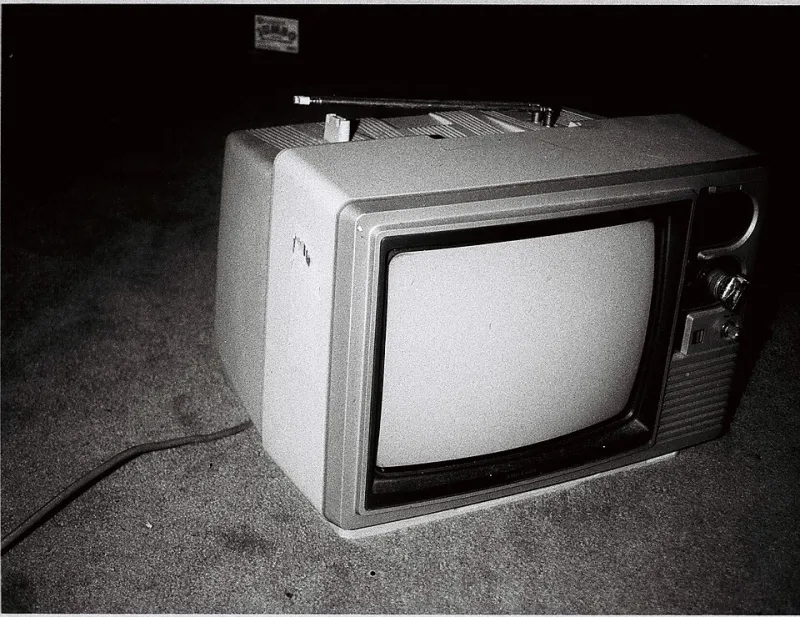
Photo: Matthew Paul Argall from Australia, CC BY 2.0, via Wikimedia Commons
There's a version of television history that nobody really teaches. It doesn't start with I Love Lucy or end with The Sopranos. It lives in the dead hours — the 2 a.m. blocks, the scrambled satellite feeds, the channels your cable box couldn't quite decode but you watched anyway because something about the static felt intentional. If you knew where to tune in, you caught something that didn't belong in primetime. You caught the signal.
That signal, it turns out, never really went away. It just changed frequencies.
The Graveyard Shift Was Actually a Lab
USA Up All Night ran from 1989 to 1998, and if you were a teenager in the early '90s with a TV in your bedroom, you already know what that meant. Rhonda Shear and Gilbert Gottfried hosting B-movies with commercial interruptions that felt more like performance art than advertising. It was low-budget, occasionally incoherent, and completely magnetic. Nobody was supposed to be watching at midnight on a Friday — but everyone was.
What USA Up All Night accidentally pioneered was parasocial late-night community. Viewers weren't just watching movies; they were watching hosts react to movies, building a shared language around the bad effects and the worse dialogue. Sound familiar? It should. That's basically the architecture of every reaction channel on YouTube and every live-stream on Twitch today.
Media historian and independent researcher Claire Mossfield, who has spent years cataloguing pre-streaming cult television, puts it plainly: "Those late-night blocks weren't filler. They were the only space on television where weirdness had permission to exist. The networks didn't care enough to interfere, and that indifference accidentally created freedom."
The Channels Nobody Remembers (But Everybody Felt)
Beyond USA's midnight experiments, the '90s cable landscape was littered with channels operating on the fringes of viability. The Sci-Fi Channel before it rebranded as Syfy was airing Mystery Science Theater 3000 reruns and original anthology series that read more like zines than television. Request TV, an early pay-per-view hybrid, let viewers theoretically influence programming — a clunky, analog version of what Twitch chat does in real time today.
Then there was The Box, a music video channel that operated on a request-and-pay model. You called a 900 number, paid a few bucks, and your video got queued. It was democratic in the messiest possible way, which meant regional rap tracks and underground metal videos shared airtime with pop hits. The algorithm didn't curate it — the audience did, one phone call at a time. If that doesn't sound like TikTok's For You Page in disguise, you're not listening closely enough.
IFC and Sundance Channel in their earliest configurations were similarly lawless. Before either became prestige TV destinations, they were airing experimental short films at odd hours, hosting director Q&As that felt more like college film class than television, and generally broadcasting for an audience of maybe forty thousand people nationwide who happened to care deeply about cinema in a way that their local multiplex couldn't accommodate.
Adult Swim's Big Bang and What It Actually Meant
The conversation always comes back to Adult Swim, and honestly, it should. When Cartoon Network flipped to Adult Swim programming at night starting in 2001, it wasn't just a programming block — it was a declaration that a channel could have a split identity, that the same frequency could carry completely different signals depending on what time you tuned in.
Early Adult Swim was genuinely strange in ways that feel hard to overstate now. Aqua Teen Hunger Force, Harvey Birdman, The Brak Show — these weren't just weird cartoons. They were structured around an assumption that the viewer was in on the joke, that watching required a kind of cultural fluency you couldn't acquire from anywhere mainstream. If you got it, you got it. If you didn't, the channel wasn't going to explain itself to you.
That gatekeeping-through-tone is something Adult Swim never apologized for, and it built one of the most loyal cult audiences in television history. It also directly prefigured the way niche streaming content operates now — shows like The Rehearsal, I Think You Should Leave, and How To with John Wilson all carry that same DNA. They're not trying to be for everyone. They're trying to be completely, precisely for someone.
What Got Lost in the Transition
Here's the uncomfortable part of this history: a lot of what made these channels vital was the scarcity. You couldn't rewatch USA Up All Night the next morning. You couldn't clip your favorite moment and share it. If you missed the broadcast, you missed it, and that impermanence gave the experience a weight that on-demand content structurally can't replicate.
The communities that formed around these channels existed in physical space — at school, at work, in record stores. "Did you see that thing on IFC last night?" was a sentence that meant something because it implied shared access to something genuinely hard to find. The friction was the point.
Mossfield notes that this is part of why so many contemporary content creators deliberately introduce friction into their work. "The streamers who build the most devoted communities — the ones with inside jokes and coded references and lore you have to earn — they're recreating that late-night cable feeling. They want you to feel like you found something, not like something was served to you."
The Frequency Is Still There
The legacy of these forgotten channels isn't really about nostalgia, though nostalgia is a useful entry point. It's about understanding that the weirdest, most boundary-pushing content has always found its audience by broadcasting on a frequency that most people can't quite tune into — and that the people who can tune in become fanatically devoted as a result.
Streaming platforms are still figuring out how to manufacture that feeling at scale, and most of them are failing because scale is precisely what destroys it. The channels that shaped a generation of underground content creators weren't successful despite being obscure. They were powerful because of it.
Somewhere right now, there's a creator broadcasting into what feels like nothing — late at night, low budget, completely committed to a vision that the mainstream hasn't caught up to yet. If you know where to look, you'll find it.
Tune in if you know the frequency.