Lost on the Dial: The Pirate Broadcasters and Ghost Stations That Built Fandoms From Static
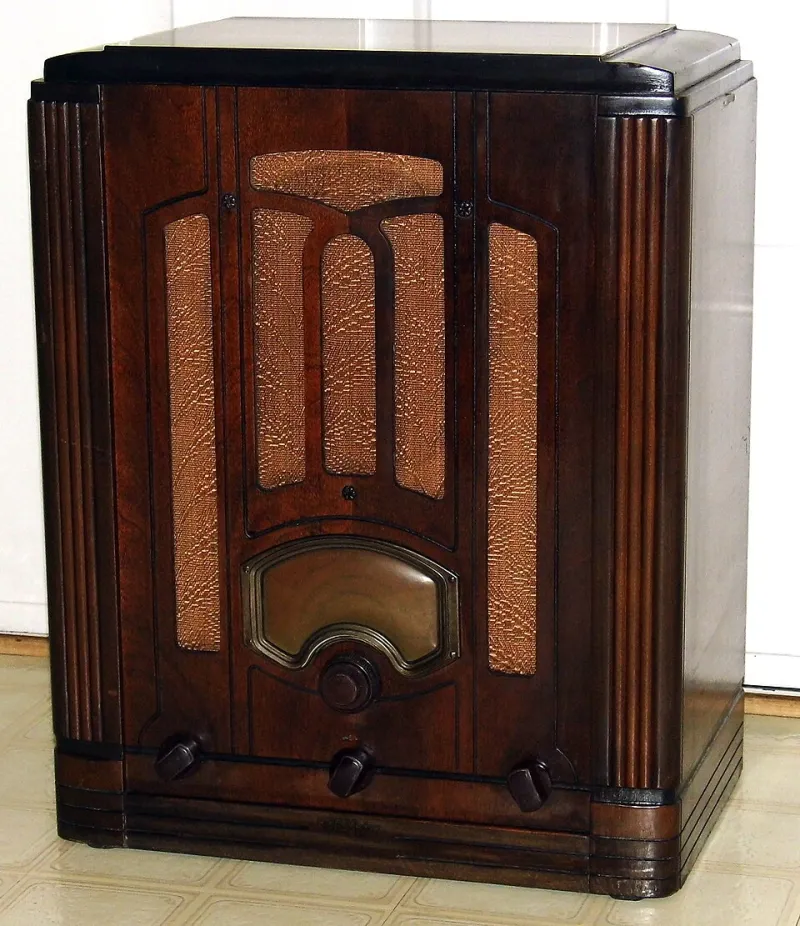
Photo: Joe Haupt from USA, CC BY-SA 2.0, via Wikimedia Commons
Sometime in the mid-1980s, a teenager in rural Ohio started picking up a station on the AM band that nobody could explain. It played jazz — strange, dissonant jazz — for exactly three hours every Sunday night, then disappeared. No call letters. No DJ voice. No commercials. Just music and the occasional burst of what sounded like Morse code between tracks. He told his friends. His friends told their friends. By the time the station stopped transmitting for good, about two years later, there was a small, genuinely passionate community of listeners who had never once been told what they were listening to.
That kind of story wasn't rare. It was, in a lot of ways, the defining experience of a certain strain of American radio culture — and it produced some of the most devoted fan communities the entertainment world has ever seen.
The Frequency as a Threshold
To understand why underground radio created such intense loyalty, you have to think about what made it different from legitimate broadcasting. Commercial radio in the US, especially from the 1970s onward, was built around predictability. Formats. Rotations. The same 40 songs cycling through on a tight clock. The goal was to keep you from changing the station, which meant never surprising you too much.
Pirate stations, college radio, and the genuinely mysterious shortwave transmissions that populated the dial had no such constraint. They could be weird. They could be inconsistent. They could play a 22-minute free jazz piece followed by a Bulgarian folk recording followed by dead air. And because you couldn't just look them up — because there was no Wikipedia entry, no official website, no verified social account — the act of listening became an act of investigation.
That friction, which commercial radio worked hard to eliminate, turned out to be exactly what created passionate audiences.
Numbers Stations: The Original Cryptic Content
No conversation about mysterious radio communities is complete without numbers stations — those Cold War-era shortwave transmissions that broadcast strings of numbers, sometimes in a robotic voice, sometimes in a child's voice, over a repeating musical motif. Officially, they didn't exist. Governments never acknowledged them. They were almost certainly used to communicate with intelligence operatives in the field.
But they also developed a genuine civilian following. The Conet Project, a 1997 compilation of numbers station recordings, sold out multiple pressings and became a cult artifact. Boards of Canada sampled them. Wilco used recordings on Yankee Hotel Foxtrot. An entire aesthetic — paranoid, lo-fi, deeply American in its Cold War anxiety — grew out of people sitting in their basements with shortwave receivers trying to decode something that was never meant for them.
The point wasn't decoding it, really. The point was the feeling of being close to something hidden. Of tuning into a frequency that most people didn't know existed.
College Radio's Closed-Loop Ecosystems
On the more terrestrial end of things, American college radio in the 1980s and early 90s did something commercially unprecedented: it built devoted local fan bases around music that major labels had written off entirely. Stations like WFMU in New Jersey, KEXP's predecessor in Seattle, and dozens of smaller university stations across the country operated as genuine tastemaking institutions, but only for people within range of the signal.
That geographic limitation was a feature. If you lived in Northampton, Massachusetts, and you discovered a band through WAMH at Amherst College, you shared that discovery with a specific, bounded community of people. The music meant something locally. It had a context. When those bands came through town, the shows felt like a gathering of people who'd been let in on the same secret.
This is a dynamic that streaming has spent years trying to recreate algorithmically — the "you might like" recommendation, the curated playlist, the Spotify-generated radio station — and largely failed to replicate. The difference is consent and effort. You had to seek out the college station. You had to tolerate the signal degrading when the weather changed. You had to be there on Thursday night at 11pm when the good show was on. That investment produced a different quality of attention than a shuffle play.
Pirate Stations and the Mythology of Disappearance
Perhaps the most potent ingredient in underground radio's community-building formula was impermanence. Pirate stations got shut down by the FCC. Numbers stations went silent without explanation. College radio DJs graduated and the show they hosted died with their enrollment. Every one of these endings left a gap in the listener's life — and gaps, it turns out, are incredibly good at generating mythology.
The communities that formed around Radio Caroline, the legendary British pirate station that broadcast from a ship in the North Sea, outlasted the station itself by decades. The listeners who'd tuned in during the 1960s formed organizations, published newsletters, and eventually websites, dedicated to preserving and celebrating something that had been technically illegal and technically gone for years. The absence was part of the appeal.
There's a lesson in that for anyone thinking about how communities form around creative work. Scarcity and mystery don't just preserve interest — they generate it. When something can disappear, the act of paying attention to it feels meaningful in a way that infinite on-demand access simply doesn't produce.
Does Any of This Translate?
Streaming platforms have experimented with exclusivity — limited-time releases, platform-specific content, surprise drops with no advance notice. Some of it has worked. The cultural moment around a surprise album release can briefly recreate the urgency of tuning in before the signal fades.
But the fundamental architecture of streaming is antithetical to the radio experience. Everything is archived. Everything is searchable. The friction has been engineered out of the system as thoroughly as possible, because friction costs subscribers.
What's interesting is that the creators quietly building underground distribution networks right now — the ones hiding content in steganographic layers, running Discord servers with rotating access codes — are essentially rebuilding the pirate radio experience for the digital age. The signal is out there. You just have to know the frequency.
That Ohio teenager who spent two years trying to figure out what he was listening to on Sunday nights? He never found out. The station just stopped one week and never came back. He's in his 50s now. He still thinks about it.