Silence Has a Sound: The Archivists Hoarding Radio's Empty Frequencies
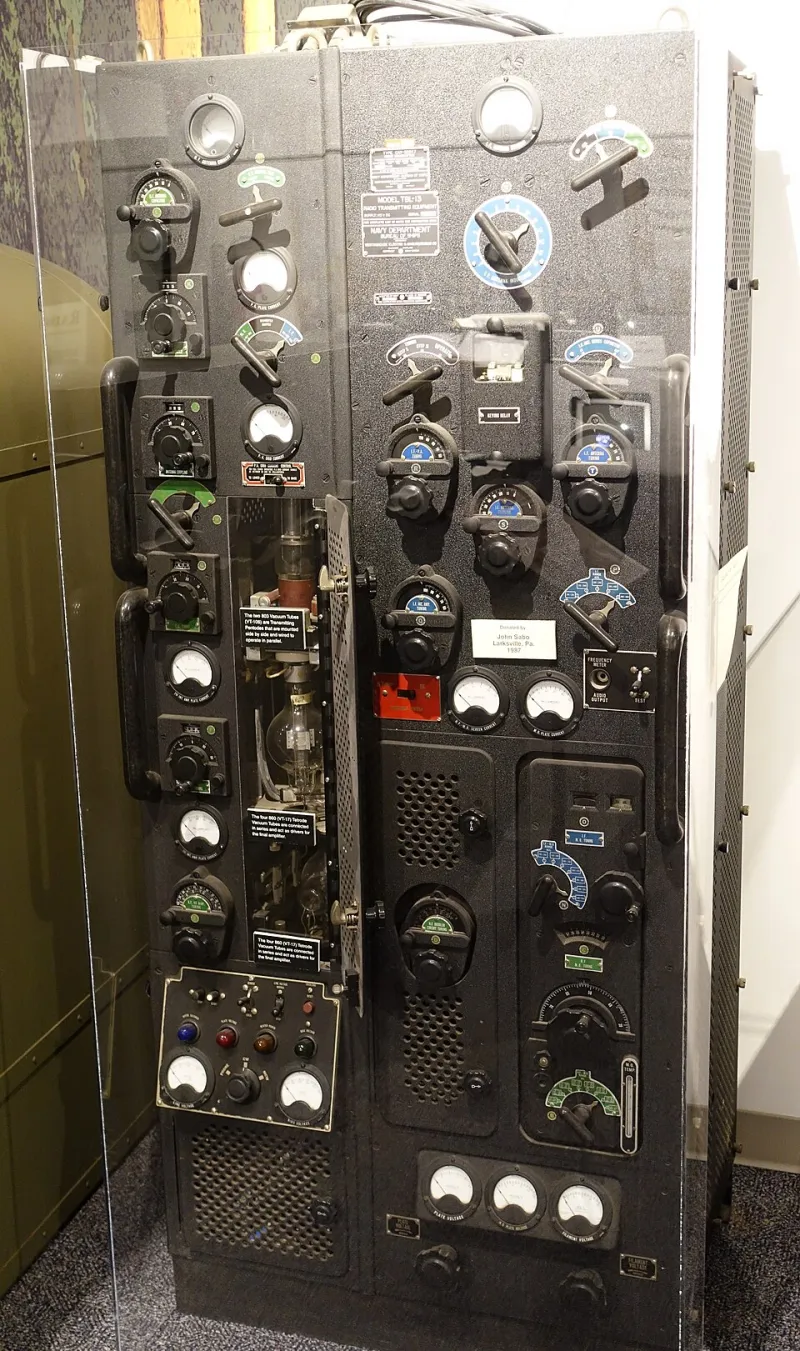
Photo: Daderot, CC0, via Wikimedia Commons
Somewhere in a folder on a hard drive in suburban Ohio, there are 47 hours of nothing. Not nothing in the philosophical sense — nothing in the very literal sense. Dead air. The soft, pressurized hiss of a carrier wave holding open a frequency that nobody is broadcasting on anymore. The guy who recorded it calls the collection "the shelf." He's been adding to it since 2011.
He is not alone.
What Dead Air Actually Is
Before you can understand why anyone would want to collect it, you need to know what dead air actually sounds like — because it isn't silence. True silence doesn't exist in broadcast radio. When a transmitter is on but nobody's talking, what comes through is the carrier tone: a low, almost subliminal hum that exists purely to hold the frequency open. Layer on top of that the atmospheric static, the occasional bleed from a neighboring signal, and the faint mechanical breathing of the equipment itself, and you've got something that's technically empty but sonically alive.
Dead air has a texture. Collectors will tell you this immediately and with surprising passion. There's a difference between a dead AM station at 3 a.m. and an FM frequency that's been abandoned mid-broadcast. There's a difference between a carrier tone in rural Montana and one bleeding through in a city where a dozen other signals are bumping up against it. To the untrained ear, it's all just static. To these archivists, it's geography. It's time. It's proof that something used to be there.
The Archive Community
The community doesn't have one home. It's scattered across forums, a few Discord servers, some long-running threads on specialized radio hobbyist boards, and a handful of SoundCloud accounts that upload without explanation or description. You find it the way you find most things worth finding online — by accident, by following a link that leads to another link, by recognizing that someone is talking about something you didn't know had a name.
The people in these spaces tend to come from a few different directions. Some are former shortwave radio enthusiasts who got hooked on scanning and just... kept scanning past the signals. Some are sound artists and field recorders who treat the electromagnetic spectrum the way other people treat forests — as a location worth documenting. Some are, frankly, insomniacs who discovered that the sound of a dead AM frequency is the most effective sleep aid they've ever found and then got weird about it in the best possible way.
What they share is a belief that these recordings are documents. Not entertainment, not ambient music — actual historical records of infrastructure in the process of disappearing.
Why It Matters That These Frequencies Are Dying
American radio has been quietly gutting itself for two decades. Consolidation, automation, and the migration of listeners to streaming have left hundreds of frequencies running skeleton operations or going completely dark. An AM station that once had a morning show, afternoon drive programming, and a late-night host now might run a syndicated feed from a server in another state, or just a carrier tone and a legal ID every hour. Or nothing at all.
The dead air collectors are, in a real sense, doing preservation work that nobody commissioned and nobody is paying for. When a frequency goes dark, the sound of that transition — the moment the last automated track finishes and the equipment just... keeps running — is gone unless someone was recording. Most people weren't. These folks were.
There's a woman in the Pacific Northwest who has been specifically chasing the frequencies of stations that went dark during the 2008 financial crisis, when a wave of small independent broadcasters lost their funding in a matter of months. She calls the project "the recession dial." She's found recordings for about 30 of the 90 stations on her list. The rest are just gone.
The Listening Experience
If you've never sat with one of these recordings, it's hard to describe what the experience is like. There's an initial resistance — your brain keeps waiting for something to happen, for a voice or a song to cut through. When it doesn't, most people give up. But if you stay with it, something shifts.
The recordings start to feel less like absence and more like presence. You become aware of the texture of the static, the way it shifts and breathes. You start to hear the history of the frequency — not in any mystical sense, but in the very practical sense that the sound you're hearing is shaped by the physical environment, the equipment, the atmospheric conditions of a specific place and time. It's a document. It just takes a minute to learn how to read it.
Some members of the community have started mixing these recordings into longer compositions, layering carrier tones from different regions, building sonic maps of the country's abandoned broadcast infrastructure. Others keep them strictly archival — no editing, no processing, just the raw capture. Both camps argue about methodology with the same energy that record collectors argue about pressing quality.
Tuning Into the Void
What makes this community feel very much in the spirit of what we're always chasing here at XHXH Signal is the refusal to accept that empty means worthless. These collectors found a signal inside the silence. They built a culture around something that the mainstream media world would look at and see as a technical error, a gap to be filled, a problem to be solved.
The frequencies are dying. The equipment is aging out. The atmospheric conditions that shaped these recordings are changing. In twenty years, some of these captures will be the only evidence that a particular station, a particular transmitter, a particular moment in American broadcast history existed at all.
Somebody's got to hold onto the nothing. Might as well be the people who learned to love it.