Built to Break the Crawler: Inside the Communities Deliberately Poisoning the Algorithm

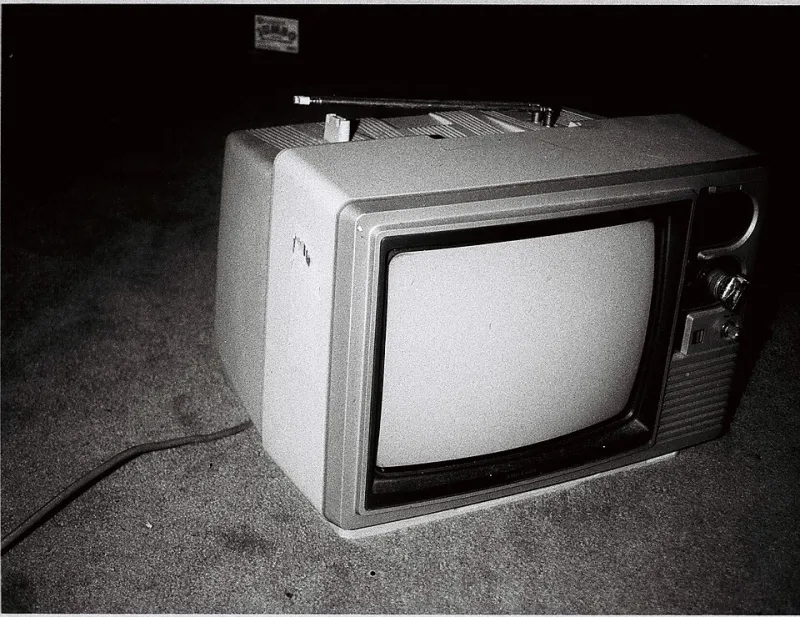
Photo: Nigel Chadwick, CC BY-SA 2.0, via Wikimedia Commons
Sometime around 2018, a small online forum dedicated to a particularly niche strain of experimental hip-hop started doing something unusual. Whenever a thread started gaining traction outside its usual membership — when traffic spikes suggested it was getting picked up by aggregators or recommendation engines — moderators would quietly restructure the most-linked posts. Titles got changed to inside references that meant nothing out of context. Images got swapped for ones that required three layers of shared history to parse. The forum effectively made itself unreadable to outsiders on purpose.
They called it "resalting." The idea being that if the outside world found the flavor, you changed the recipe.
This wasn't paranoia. It was strategy.
The Homogenization Problem
To understand why communities do this, you have to understand what happens to online spaces that don't. The pattern is depressingly consistent at this point: a community forms around something genuinely specific — a subgenre, a regional scene, a shared aesthetic sensibility, a particular way of being online. It develops its own language, its own references, its own internal logic. Then something gets clipped and posted somewhere bigger. The algorithm picks it up. New people arrive, well-intentioned but culturally misaligned. The old members start leaving. Within eighteen months, the space looks like everything else.
This has happened to subreddits, Discord servers, Tumblr communities, Twitter niches, and YouTube comment sections more times than anyone can count. The mechanism is so reliable it has its own informal taxonomy among community organizers: discovery, dilution, departure.
The communities that have survived that cycle — and there are more of them than you'd expect — have mostly done it by making themselves hostile to the recommendation engine in specific, deliberate ways.
The Tactics, Explained
Talk to enough people who run these spaces and a few consistent strategies emerge.
Reference layering is probably the most common. The idea is simple: structure your content so that understanding any given post requires fluency in at least three or four prior contexts. Not as gatekeeping for its own sake, but because content that requires that much pre-knowledge to parse is genuinely unclippable. You can't take a screenshot of a conversation that's funny only if you remember a specific running joke from eight months ago and share it somewhere that will make sense. The algorithm can surface it, but it can't make it land.
Intentional production ugliness is the second major tactic. One community organizer — who runs a mid-sized Discord dedicated to a particular era of cable access television — described it to us as "making things that look like they're from before anyone cared about looking good." Grainy images, deliberately awkward formatting, text posts that violate every best practice for readability. The aesthetic signals inaccessibility even before the content does. Recommendation engines are trained on engagement signals, and content that looks broken tends not to generate them.
Anti-viral formatting is subtler. This means structuring posts so the most interesting or funny or resonant part is buried — not in a way that rewards patience necessarily, but in a way that makes the content impossible to excerpt. If you can't grab the punchline without the setup, and the setup is six paragraphs of deeply contextual history, the thing doesn't travel.
This Has Happened Before
What's interesting historically is that this isn't new behavior — it's just new platforms. The impulse to make a cultural space illegible to outsiders is as old as subcultures themselves.
Early punk zine culture operated on similar logic. Distribution was deliberately chaotic, print runs were deliberately small, and the writing often assumed familiarity with a very specific set of references that the mainstream press couldn't access. The difficulty wasn't accidental — it was the point. Same with early hip-hop flyer culture in New York, where event information was sometimes intentionally partial, circulated only through physical networks that required you to already be plugged in.
The difference now is that the threat isn't just mainstream cultural absorption — it's algorithmic. The crawler doesn't care about your subculture. It just wants engagement signals. And it will surface your most accessible content whether you want it to or not, unless you specifically engineer against that outcome.
Does It Actually Work?
The honest answer is: sometimes, and temporarily.
Resalting and reference layering do create real friction. Spaces that practice these tactics consistently do maintain higher average cultural fluency among their members, and they do tend to survive longer before dilution hits. One server we looked at has maintained essentially the same membership character for four years in a space — mid-tier Discord — where that kind of longevity is genuinely unusual.
But the tactics require constant maintenance. The reference pool has to keep evolving. The ugliness has to stay ahead of what ugliness currently looks like to outsiders. It's an arms race with a crawler that doesn't get tired.
And there's a real cost. Communities that optimize hard for illegibility tend to be genuinely difficult to join even for people who would fit. The same friction that keeps the algorithm out keeps some legitimate newcomers out too. Several organizers we spoke with described this as an acceptable tradeoff. A few seemed less sure.
What This Means for the Broader Internet
If more communities adopt these tactics — and the conditions that make them appealing aren't going away — the long-term implication is a more fragmented internet. Not fragmented in the geographic or political sense people usually mean, but fragmented by legibility. A landscape of spaces that are simply not readable to anyone who isn't already inside them.
That's arguably what the internet looked like before the recommendation engine era. Webrings, niche forums, IRC channels — these were all spaces that required active navigation and pre-existing knowledge to find and use. The algorithm flattened that. These communities are trying to un-flatten it, one obscure reference at a time.
Whether that's a retreat or a return depends on what you think the internet was supposed to be for. But it's happening either way. The signal is out there. You just have to know what frequency to tune to.