Dust and Devotion: The Collectors Turning Dead Media Into Private Shrines
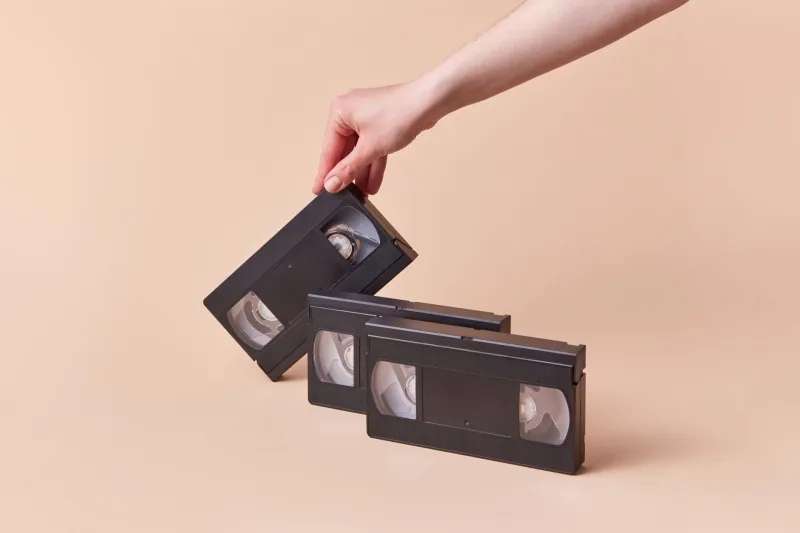
There's a particular smell that comes with a VHS tape pulled from a Rubbermaid bin in someone's garage. Plastic, oxidation, something faintly chemical. If you know the smell, you already know what kind of person this article is about. If you don't, that's kind of the point.
Across the US — in climate-controlled spare bedrooms, in storage units off state highways, in basements that smell like that — a scattered and largely invisible community of collectors is doing something that looks, from the outside, a lot like hoarding. But spend five minutes talking to any of them and the picture gets more complicated fast. These aren't people who just couldn't throw things away. These are people who made a decision.
The Stuff That Didn't Make It Online
Here's the thing most people don't think about: digitization has a bias. The stuff that made it to streaming, to YouTube, to archive.org — that's the stuff someone decided was worth saving. Everything else got left behind. And "everything else" is enormous.
We're talking about regional cable access programming from the late '80s. We're talking about the bonus features on DVDs that never got ripped because nobody cared in 2003 and now the disc is the only copy. We're talking about promotional merchandise — the kind of stuff that came bundled with fast food kids' meals or mailed out to fan club members — that documented the weird, peripheral life of a franchise better than any official making-of ever could.
One collector based in Ohio, who goes by a handle that roughly translates to "static ghost" in a niche Discord server, has spent the better part of a decade acquiring what he calls "the receipts." Not financial records — cultural ones. TV Guide issues, local newspaper entertainment sections, VHS rental store stickers still stuck to the cases. "The algorithm doesn't know this stuff exists," he said in a voice message to XHXH Signal. "Which means it effectively doesn't exist. Except it does. I have it."
Decay as a Feature, Not a Bug
The counterintuitive thing about this community is how many of its members are actively uninterested in digitizing their collections. Ask them why and you'll hear a version of the same answer every time: once something becomes a file, it becomes a copy. And copies are infinitely reproducible, which means they're also infinitely decontextualizable. A file can be taken out of context, reposted, stripped of metadata, misattributed, fed into a training dataset. A VHS tape sitting in a labeled box inside a specific person's home carries its history with it.
There's a collector in the Pacific Northwest — she goes by "Meridian" in the spaces where this community overlaps — who collects what she calls "carrier artifacts." The tape itself matters less to her than the case, the label, the rental sticker, the handwritten note from whoever dubbed it. "The degradation is documentation," she told us over email. "When a tape gets grainy, that's time. You can't fake time. You can't compress it and upload it."
This is not a universally held view. Plenty of archivists in adjacent communities argue that a degraded tape becoming unplayable is the worst possible outcome — that digitization, even imperfect, beats total loss. But the collectors we're talking about here aren't traditional archivists. They're not trying to make content accessible. They're trying to make a point.
The Personal Museum as Political Act
It sounds dramatic to call a shelf of discontinued DVDs an act of cultural rebellion. But there's a real argument here that deserves to be taken seriously.
The current media landscape is defined by two forces working in tandem: algorithmic curation, which decides what gets seen, and corporate licensing, which decides what gets kept. Streaming services pull titles with no notice. Studios let catalog titles lapse into legal limbo. Entire chapters of American pop culture — regional TV, niche genre films, short-run merchandise lines — are effectively disappearing not because anyone actively destroyed them, but because nobody with institutional power decided they were worth the storage cost.
Into that vacuum steps the private collector. And what they're doing, whether they'd use this language or not, is opting out of the system that decides what matters. Their collections don't have recommendation engines. They don't have analytics. They don't surface content based on engagement metrics. They surface content based on one person's specific, idiosyncratic, often inexplicable sense that this thing deserved to survive.
A collector in Texas who focuses on discontinued fast food promotional tie-ins — the kind of stuff that documented franchise culture in the '90s better than any press release — put it this way: "Nobody greenlit my collection. Nobody decided it was IP worth protecting. That's exactly why it still exists."
What Gets Kept and Why
The range of stuff being preserved by this community is genuinely wild. VHS recordings of late-night cable programming. Discontinued soundtrack CDs for films that never got wide releases. Fan club newsletters printed on actual paper and mailed to actual addresses. Regional amusement park merchandise. Promotional items from TV shows that got canceled after three episodes.
What connects all of it isn't genre or format or even era — it's obscurity. These are things that exist in the gap between "historically significant enough to be institutionally preserved" and "personally meaningful enough to be kept by a casual fan." They fell through both floors. And now a loose network of obsessives is the only reason they still exist at all.
There's something that functions like a signal here, if you want to use that word. Not a broadcast signal — more like the kind of frequency you have to already be tuned to in order to receive. The collectors aren't recruiting. They're not monetizing. Most of them aren't even particularly interested in being written about. But their collections exist, physical and specific and resistant to search indexing, and that fact alone is doing something.
The Long Game
Nobody in this community is under any illusion that VHS tapes last forever. The magnetic medium degrades. The players become harder to find. At some point, playback stops being possible. But that endpoint feels different to them than the endpoint of a delisted streaming title — because the tape existed in a specific place, held by a specific person, for a specific reason. Its disappearance, when it comes, will be local and accountable rather than silent and systemic.
That's the bet these collectors are making. Not that physical media outlasts digital infrastructure — it probably won't. But that a thing which decays on its own terms is more honest than a thing that vanishes at the discretion of a licensing agreement.
Hard to argue with that. Harder still to find it on any platform that's trying to sell you something.