The Ones Who Remember Everything: Inside the Secret Databases Outlasting Official Discographies
There's a version of your favorite album that you've never heard. Not a remix, not a deluxe edition with two bonus tracks bolted on at the last minute. A full alternate reality — different mixes, scrapped interludes, a closing track that got pulled forty-eight hours before the mastering session. Somewhere on the internet, someone has documented every second of it. They have timestamps, tape generation notes, and a sourcing thread that goes back eleven years.
You just don't have the password to find it.
What the Official Record Leaves Out
The music industry has always had a complicated relationship with its own history. Labels lose masters. Estates seal vaults. Streaming platforms flatten catalog into a single, curated surface that tells you what's available without hinting at what got buried. The official discography is, more often than not, an edited highlight reel — cleaned up, licensed, and stripped of context.
Fans noticed. And a specific kind of fan — methodical, patient, slightly manic about completeness — decided to do something about it.
What emerged over the past two decades is a sprawling, largely invisible infrastructure of bootleg databases, demo catalogs, and leak registries maintained by collectors who treat unreleased music with the same rigor a rare book librarian brings to a first edition. These aren't just people hoarding MP3s on a hard drive. They're building metadata architectures. Cross-referencing session logs. Debating provenance with the intensity of art historians.
And in many cases, what they've built is simply more accurate than anything the label ever published.
The Database as Devotion
Spend enough time in the right private forums and you start to understand that this work is less about ownership and more about testimony. The collectors aren't trying to profit. Most of them are actively hostile to the idea of commercializing what they've gathered. What they want is a complete record — a true account of what an artist actually made, not just what got approved for release.
One archivist who's spent over a decade cataloging the unreleased output of a major-label artist from the early 2000s described their process as "filling in the negative space." Every session date gets logged. Every engineer credit cross-referenced against studio booking records that occasionally surface in old music press. Every tape generation noted, because a third-generation cassette dub sounds different from a DAT transfer, and that difference matters when you're trying to establish which version of a track is closest to what the artist originally heard in the room.
The level of specificity is almost hard to describe to someone who hasn't seen it. These databases have fields that official discographies don't even think to include — things like which sessions were cut short, which producers were replaced mid-recording, which tracks were demoed under different working titles before anyone settled on a name.
Private Forums, Encrypted Channels, Earned Access
None of this lives on the open web. That's intentional.
The communities maintaining these archives have learned — sometimes the hard way — that visibility attracts the wrong attention. Cease-and-desist letters. DMCA sweeps. The occasional coordinated effort by a label's legal team to scrub a particularly sensitive leak from existence. Going private isn't paranoia. It's institutional memory.
Access to the more serious databases typically requires vouching. You get in because someone already inside trusts you enough to bring you through. New members often spend months in a read-only state, absorbing the culture before they're expected to contribute. Contribution itself is structured — you don't just dump files, you document them. Sourcing matters. Context matters. An undocumented upload is treated with suspicion, sometimes outright rejection.
This vetting culture creates something that feels almost counterintuitive in the current internet landscape: a community where slowing down is a feature. Where the value of information is tied directly to how carefully it's been handled.
More Authoritative Than the Label
Here's the part that would make some A&R executives genuinely uncomfortable. When a discrepancy exists between the official record and what these underground databases say happened, the databases are frequently right.
There have been documented cases — discussed openly within these communities, though rarely outside them — where archivists identified mislabeled tracks on official releases, corrected session dates that had been published incorrectly in liner notes, and in at least a handful of instances, identified recordings that a label claimed didn't exist and then quietly licensed years later once the legal situation clarified.
The archivists don't gloat about this, exactly. But they notice it. And it reinforces a core belief that runs through these communities: the people who care the most are better positioned to preserve the record than the people who own the rights.
What This Says About Fandom Right Now
On the surface, it seems strange that this kind of obsessive archival culture is thriving in an era of supposed total access. Streaming gave everyone everything, right? Except it didn't. It gave everyone the officially sanctioned everything — the version the rights holders want monetized. The rest got quietly left behind.
What the frequency keepers are doing, in their locked forums and encrypted channels, is refusing to accept that framing. They're insisting that the full picture matters. That an artist's creative process — including the dead ends, the abandoned experiments, the tracks that didn't make the cut — is worth preserving with the same seriousness as the finished product.
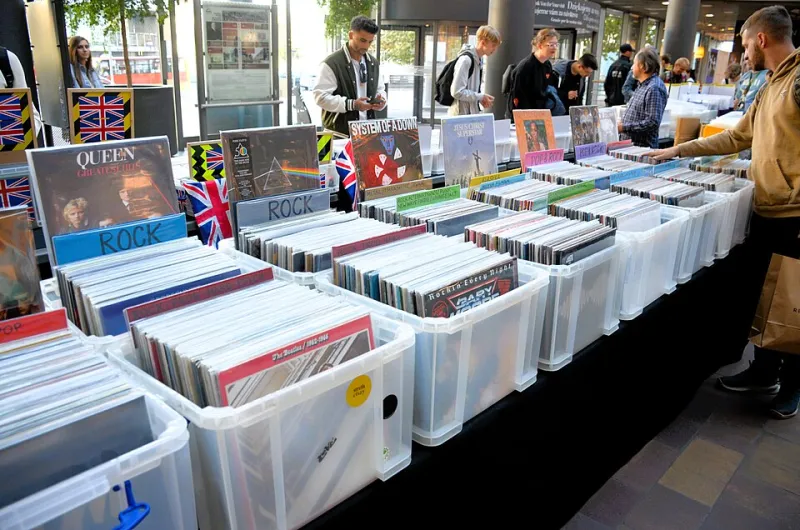
There's something almost stubbornly old-school about it, in the best possible way. It's the same impulse that drove people to trade bootleg cassettes at record fairs in the '80s, just rebuilt for a landscape where physical media is irrelevant and the real scarcity is trust.
The Signal Underneath the Signal
If you're reading this on XHXH Signal, you probably already understand the appeal of information that exists slightly outside the main frequency. The thrill of finding a channel that isn't listed anywhere. The specific satisfaction of knowing something that the algorithm didn't hand you.
The bootleg archivists are operating on that same register, just deeper in the dial. Their work isn't going to get a Pitchfork feature or a documentary on a streaming platform. It lives in invite-only spaces, sustained by people who decided that being thorough was worth more than being visible.
Somewhere out there, the complete version of your favorite record exists in a database maintained by someone you'll never meet. They've sourced it, tagged it, argued about it, and protected it for years. Not because anyone asked them to. Because someone had to.
That's the frequency. You just have to know how to listen for it.