Rewind Culture: The People Choosing Tape Over the Cloud on Purpose

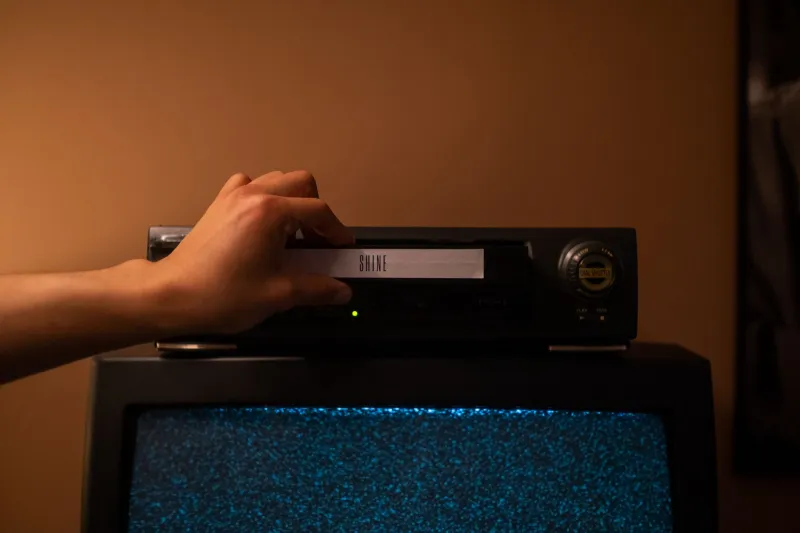
There's a specific kind of satisfaction in pressing rewind and actually waiting for it. The whirr, the resistance, the little mechanical click when the tape hits the beginning. It takes maybe ninety seconds. You can't skip it. You can't background it. You just stand there and let the machine do its thing.
For a certain slice of the population — mostly millennials in their late twenties and thirties — that ninety seconds is the whole point.
Not Your Grandma's Nostalgia Trip
Let's be clear about something upfront: this isn't the same conversation as vintage aesthetic TikToks or lo-fi YouTube thumbnails designed to look like old VHS recordings. Those are vibes. What's happening in living rooms from Portland to Pittsburgh to the outer boroughs of New York is something with more friction to it.
People are actively restructuring how they consume media around physical formats — VHS tapes, cassette decks, LaserDiscs in some cases — not because they're romanticizing the past but because they've made a calculated decision about what they don't want the present to look like.
"I got rid of my last streaming subscription in 2022," says one collector in Chicago who runs a small tape trading network out of her apartment. "It wasn't even really about the money. It was about the fact that I'd watched the same shows get pulled and re-added and re-pulled based on whatever licensing deal was happening that week. The catalog was never mine to rely on. The tape is just... there. It doesn't expire."
That language — ownership, permanence, reliability — comes up constantly in these conversations. It sits in pretty direct contrast to how streaming platforms market themselves, which is all about access and convenience and volume. The analog crowd tends to view that framing with suspicion.
The Surveillance Angle Nobody's Talking About Enough
Here's the part of this story that doesn't get covered as often as the aesthetics do: these collectors know exactly what their viewing habits look like to a platform. Or rather, they know what they don't look like when they're watching a tape.
"Every time you hit play on Netflix, that's a data point," explains one guy in his mid-thirties who's been building a VHS library since 2019. He works in IT, which probably explains some of his particular flavor of paranoia. "How long you watched, when you paused, whether you skipped the intro, what you searched for before you picked that show. All of it is being harvested and fed back into a recommendation engine that's also feeding back into production decisions. Your taste is being strip-mined and sold back to you as content."
Is that a slightly dramatic way to describe autoplay? Sure. But it's not wrong. And for people who've spent time thinking about how algorithmic feedback loops actually work, the appeal of a format that is physically incapable of reporting back is obvious.
A VHS tape cannot phone home. A cassette has no telemetry. The machine that plays them doesn't have a terms-of-service agreement.
Planned Obsolescence as a Political Problem
The other axis of this movement — and it does feel like a movement, even if it's decentralized and a little chaotic — is about the deliberate fragility of digital infrastructure.
People remember when iTunes purchases vanished. They remember when Google Play Music shut down. They've watched services sunset with minimal warning and digital libraries evaporate. The idea that you "own" a digital file has been stress-tested enough times now that a lot of people in their thirties have simply stopped believing it.
"Physical media can degrade," admits one tape archivist in Austin who also maintains a small repair shop for vintage playback equipment. "But it degrades on its own terms, at its own pace, and you can often see it coming. A service can just decide to stop existing tomorrow and take everything you paid for with it. That's not degradation. That's theft with extra steps."
The repair culture that's grown up around analog formats is part of this too. VCRs can be fixed. Tape decks can be recalibrated. The schematics are public, the parts are findable, and there's a whole ecosystem of people on forums who will walk you through replacing a pinch roller at midnight if you need them to. Compare that to a smart TV with a dead software update cycle and you start to see why the older technology feels, paradoxically, more future-proof.
What the Tape Actually Sounds and Looks Like
It would be dishonest not to mention that the format itself has qualities people genuinely love, separate from all the political scaffolding.
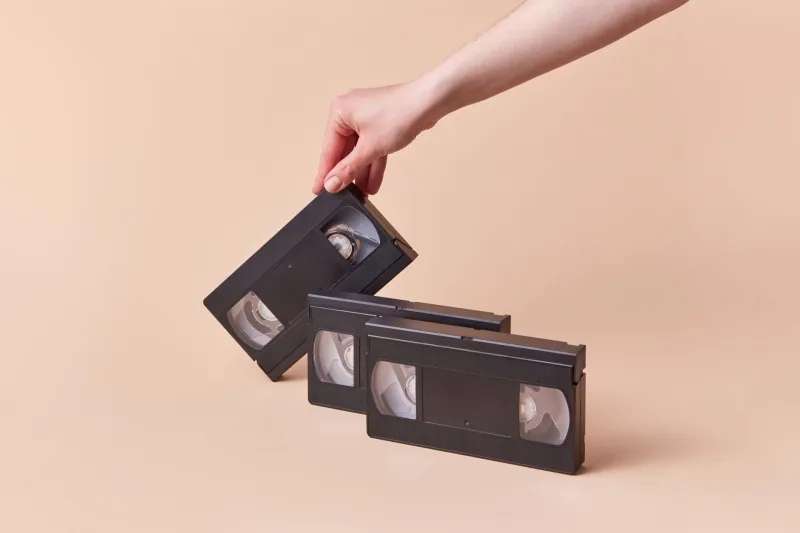
VHS has a particular visual texture — the slight softness, the color bleed, the occasional tracking artifact — that exists nowhere else. It's not just a filter you can apply. It's a product of the physical process, the magnetic particles, the heads, the tape speed. People who grew up watching movies on tape have a visceral relationship with that image quality that no digital recreation has fully captured.
Cassettes are similar. The high-end warmth, the tape hiss sitting just below the music, the way a well-loved mixtape develops its own sonic character over time — these aren't bugs. For a lot of listeners, they're the whole texture of how recorded sound should feel.
"I made a mix for my partner on cassette last year," says one collector. "She cried. Not because it was old-fashioned. Because it was permanent. I had to decide what went on it and in what order and I couldn't change it after. That constraint is what made it mean something."
Tuning Into the Refusal
What's interesting about the analog resistance — and why it fits somewhere in the same frequency range as everything else this site covers — is that it's not organized. There's no manifesto, no central Discord, no unified hashtag. It's a dispersed signal, picked up by people who've independently arrived at similar conclusions through different routes.
Some came through privacy concerns. Some through frustration with streaming library instability. Some through a genuine love of the formats themselves. Some through repair culture and the satisfaction of maintaining machines that were built to last.
But they're all, in their own way, doing the same thing: choosing a technology that operates on their terms instead of a platform's. Choosing friction over frictionlessness. Choosing the tape that's just sitting on the shelf, not reporting anything to anyone, waiting to be played whenever they're ready.
That's a small act of defiance in the grand scheme of things. But small acts of defiance, repeated daily, have a way of adding up.
Rewind and find out.