Tape Detectives: The Fan Communities Piecing Together TV's Most Buried Pilots
There's a specific kind of obsession that lives in the margins of media history. Not the kind that collects mint-condition memorabilia or argues about canon. This one is quieter, stranger, and honestly a little more unnerving — because it's aimed directly at the things that were never supposed to survive.
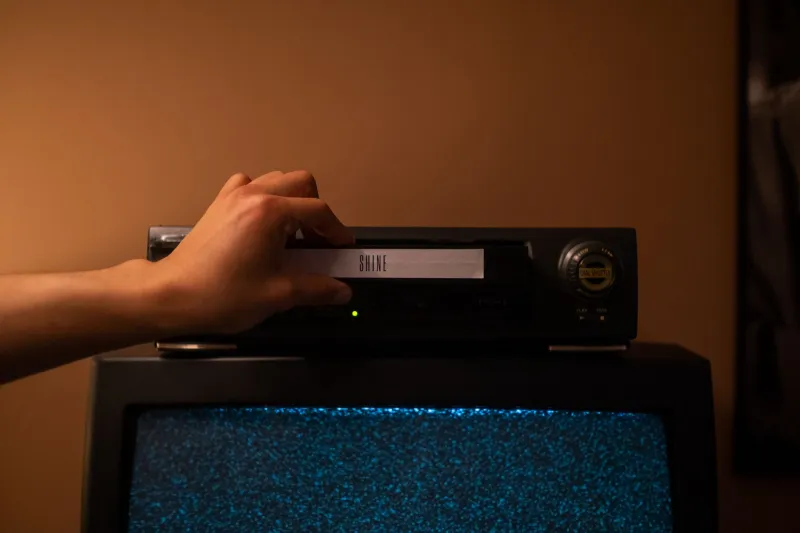
A small but intensely dedicated corner of the internet has spent years reconstructing lost or suppressed television pilots from whatever fragments still exist. Degraded VHS recordings passed around at conventions. Secondhand accounts from people who caught a broadcast once, maybe twice, before it vanished. Internal production documents that surfaced in estate sales or got quietly posted to obscure forums and then deleted. Taken individually, none of it adds up to much. But these communities treat incompleteness as a feature, not a bug. The gap is the puzzle.
What Gets Lost and Why It Stays That Way
The American television industry has a longer history of burial than most people realize. Pilots get shelved for mundane reasons — a network passes, a lead actor exits, a format feels too weird for primetime. But some disappear more deliberately. A show tests poorly and the studio quietly lets the rights lapse. A network executive kills something for personal reasons and the paperwork gets conveniently thin. Sometimes a pilot is legally entangled enough that releasing it would cost more than it's worth, so it just... stops existing in any official capacity.
The result is a category of media that isn't quite lost — someone somewhere has a copy — but isn't findable through any normal channel either. No streaming library. No DVD release. No official acknowledgment that it ever aired. Just the faint signal of collective memory and whatever physical media managed to survive the decades.
That's where the tape detectives come in.
The Methodology Is Weirder Than You'd Expect
Ask anyone deep in one of these reconstruction projects how they work and you'll get an answer that sounds almost archaeological. Cross-referencing is the foundation. A partial VHS recording — maybe 40 minutes of a 60-minute pilot, with a dropout at the 22-minute mark and tracking issues throughout — gets matched against viewer accounts posted on mailing lists from the late '90s. Those accounts get checked against any surviving press materials: a TV Guide blurb, a local newspaper review, a network affiliate's programming schedule that someone digitized and uploaded to the Internet Archive.
From there, the community starts filling in gaps. Someone remembers a specific scene. Someone else has a different partial tape that covers different minutes. A third person tracked down a grip who worked on the shoot and got a description of a sequence that never made it to broadcast at all. None of this is clean. None of it is definitive. But piece by piece, a rough shape of the thing emerges.
Some groups have developed their own internal notation systems — essentially shorthand for distinguishing between confirmed footage, corroborated memory, and speculation. One community calls these tiers "hard signal," "soft signal," and "static." The terminology feels very on-brand for people who treat media recovery like tuning an old radio.
The Networks Don't Always Cooperate (Surprise)
Here's where it gets a little thorny. Some of the pilots these communities are reconstructing weren't just forgotten — they were actively pulled. A show that aired once in 1987 and then disappeared might have been yanked because of a legal dispute with a writer. Or because it contained something embarrassing to a network executive who later became very powerful. Or because the content aged badly enough that whoever holds the rights would prefer it stay buried.
When fan archivists start surfacing this material — even in fragmentary form — they occasionally run into pushback. Cease-and-desist letters. Requests to take down forum posts containing partial transcripts. Pressure on hosting platforms to remove audio rips. The legal landscape around this stuff is murky enough that most communities operate with a degree of caution, keeping the most sensitive material in private channels and sharing access selectively.
Which, ironically, gives the whole enterprise a kind of pirate-radio energy. The information exists. It's circulating. You just have to know where to tune.
Memory as Primary Source
One of the more philosophically interesting aspects of this work is how seriously these communities take viewer memory as evidence. Academic historians tend to treat personal recollection as unreliable, and for good reason — human memory is reconstructive, not reproductive. But the tape detectives have developed their own framework for working with it.
The approach leans on corroboration over individual confidence. One person's vivid memory of a specific scene means relatively little. But when fifteen people independently describe the same visual detail — a specific prop, a piece of dialogue, the color of a costume — without having coordinated beforehand, that convergence gets treated as meaningful signal. The community isn't naive about false memories or confabulation. They've had their share of cases where a "confirmed" detail turned out to be contaminated by a similar scene from a different show. But the methodology has gotten more rigorous over time.
There's something almost touching about it. A network decides something isn't worth preserving. The official record goes blank. And then a few dozen strangers on the internet, armed with degraded tapes and thirty-year-old memories, reconstruct a thing that was supposed to stop existing. It's a collective act of refusal.
What They've Actually Recovered
Without getting into specifics that would invite the kind of legal attention these communities prefer to avoid, the results have been genuinely significant in a few cases. A mid-'80s sci-fi pilot that was thought to be completely gone turned out to have four separate partial recordings in circulation — different segments, different tape generations, different tracking quality — that a small team spent eight months reconciling into a rough but watchable composite. A late-night variety pilot from the early '90s, quietly shelved after a single test broadcast, got reconstructed well enough that a researcher was able to use the community's documentation in an academic paper about network programming decisions of that era.
None of this is going on Netflix. None of it is being sold. The reconstructions mostly live in private archives, shared carefully, with heavy documentation about what's confirmed versus inferred. The goal isn't distribution. It's knowledge. It's the stubborn insistence that something existed, even when the official record says otherwise.
The Signal Beneath the Static
What makes this community worth paying attention to — beyond the obvious cool-factor of media archaeology — is what it says about the relationship between institutions and audiences. Networks have always controlled what gets preserved and what gets erased. For most of television history, that control was nearly absolute. A show didn't survive unless someone with resources decided it was worth keeping.
But magnetic tape is stubborn. Memories are stubborn. And the internet, for all its tendency to forget things instantly, also has a long tail of obsessives who refuse to let certain things go.
The tape detectives aren't trying to restore anything to its original broadcast quality. They're not pretending to have something they don't. They're just following the signal wherever it's faint enough to require work — and finding, more often than not, that something real is still there underneath the noise.